


27 October 2026
Europe’s benchmark gas price has climbed to its highest level in four years, just as the continent enters the heating season with less gas in storage, for the time of year, than at any point in the records kept by Gas Infrastructure Europe (GIE). On Monday the front-month contract at the Dutch Title Transfer Facility (TTF) rose above €95 per megawatt-hour, extending a weekly gain of around 7%, as several EU member states began drawing on their reserves ahead of the cold months.
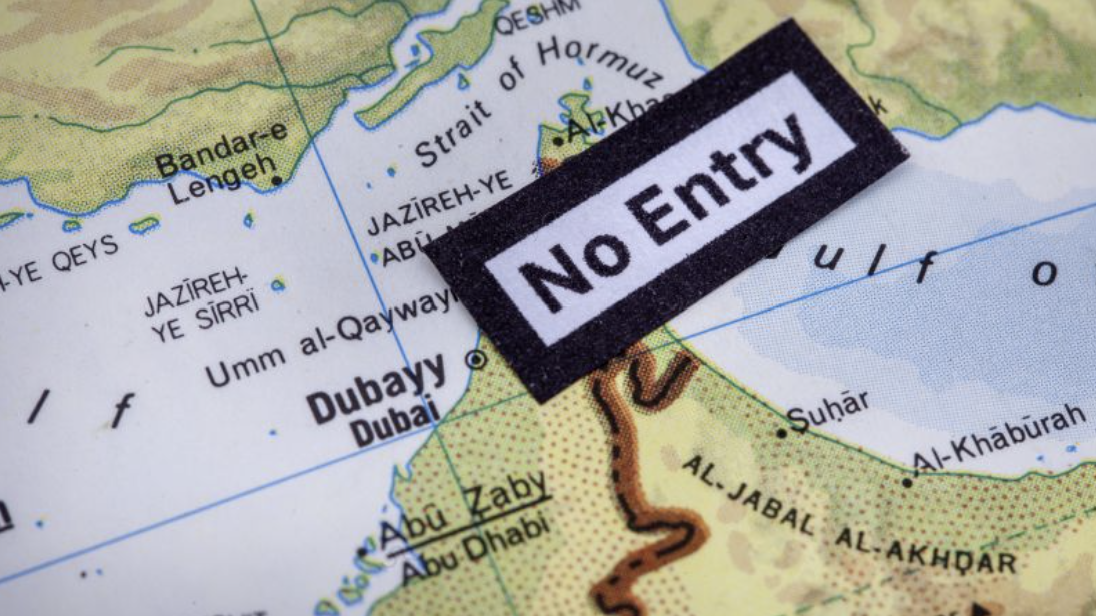
The cause is not hard to find. More than seven months after the Iran war all but closed the Strait of Hormuz, liquefied natural gas from the Persian Gulf has yet to return in any meaningful volume. Roughly a fifth of global LNG trade ordinarily passes through the strait. Qatar was the world’s second-largest exporter before the conflict, and its shipments have slowed to a trickle since Iranian missiles struck its giant Ras Laffan complex in the spring.
 A Qatari – Q-Max Tanker
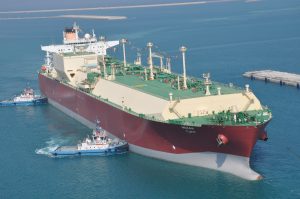 A Qatari – Q-Max Tanker
GIE, which represents Europe’s storage and terminal operators, has been blunt about the consequences. Its Secretary General, Lucie Boost, warned this month that Europe is heading into winter “with less gas in storage and less room for error”. The figures bear her out. EU storage sites were 74.6% full on 25 October, well below the five-year seasonal average and around eight percentage points lower than a year ago. By GIE’s own reckoning, Europe began October with roughly 811 TWh of gas underground, against some 940 TWh twelve months earlier.

Gas storage tanks Europe

That shortfall has set Europe against Asia in a fierce contest for spot cargoes. American exports have risen to their highest level since June. In a telling reversal, QatarEnergy itself has agreed to buy LNG from Cheniere Energy in the United States under a long-term contract, as damage to its own facilities continues to disrupt deliveries. There are tentative signs of movement: more Qatari carriers have been crossing Hormuz in recent days, some loading without broadcasting their positions. So far, though, nothing amounts to relief.
The consequences reach well beyond household heating bills. Natural gas is both the fuel and, in many cases, the raw material of modern chemistry. It underpins ammonia, fertilisers, methanol and a long chain of downstream products. Europe’s chemical makers were already contending with high costs and weak demand before the latest rally. Credit insurer Atradius has forecast that German chemical output will contract by 4.7% this year, citing the Gulf war’s effect on feedstock and energy prices. Germany’s chemical industry association has described an industry under constant stress. Every additional euro on the TTF price feeds through into the cost of coatings, additives and speciality ingredients further along the supply chain.

There is, however, another side to the ledger. Africa’s Atlantic producers have stepped into part of the gap left by the Gulf. African LNG exports rose by 27% year on year in the first quarter of 2026, to 11.32 million tonnes. Nigeria led the way on 4.99 million tonnes, a rise of 45%. European buyers have turned increasingly to cargoes from Nigeria, Algeria and Angola, which reach their terminals faster and without passing through a single contested chokepoint.
 A tanker discharging at Bonny Island – Nigeria’s LNG hub
 A tanker discharging at Bonny Island – Nigeria’s LNG hub
For Gapuma, whose interests span Nigeria, Ghana, Côte d’Ivoire, Angola and South Africa, that shift is significant. The Gulf of Guinea and the wider Atlantic seaboard are gaining strategic weight as Europe seeks dependable supply closer to home. With that comes fresh investment, new trade routes and growing demand for the chemicals and services that keep energy infrastructure running.
We have long regarded the Strait of Hormuz as a barometer for the direction of global trade and finance. This week’s price movement confirms that its effects are no longer confined to oil or to the Gulf itself. They are now being felt in European storage caverns, on factory floors and in the shipping lanes off West Africa. With storage thin and Gulf cargoes absent, the weather will decide much of what follows. A mild winter may see Europe through with little more than expensive gas. A hard one would test the system in earnest, and every day without LNG transiting Hormuz adds to that risk.