


For all its talk of clouds and algorithms, artificial intelligence is turning out to be one of the most physical industries of the age. It needs land, steel, copper and, above all, energy. The companies building it are discovering that the public grid cannot keep up.
Nowhere is this clearer than at SpaceX, which absorbed Elon Musk’s xAI earlier this year and now reports artificial intelligence as its largest revenue segment. The company is building an eight-mile pipeline, known as Starpipe, to its Texas launch site. Florida regulators have approved the tariff for a 32.4-mile line near Cape Canaveral. SpaceX has also earmarked around $2 billion for mobile gas turbines to power its data centres, and is recruiting a team to trade natural gas, both physically and financially. Its own filings show capital spending of more than $48 billion in the first nine months of 2026.
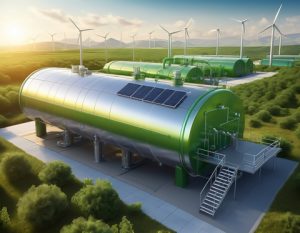
On-site gas turbines are fast becoming the power source of choice for AI data centres
unable to wait years for a grid connection
The pressure is felt well beyond one company. In America’s largest power market, PJM, the latest capacity auction cleared at its price cap and still fell short of its reliability target, with surging data-centre demand the main driver. As PJM’s chief executive, David Mills, put it, demand for electricity “continues to grow faster than electricity supply.”
The International Energy Agency expects global data-centre electricity use to almost double, from 485 terawatt-hours in 2025 to around 950 by 2030. Meeting that demand is running into hard physical limits. Lead times for gas turbines now stretch beyond 2029, while transformers, which are heavy users of copper, can reportedly take up to four years to arrive. The bottleneck is shifting from chips to equipment and materials.
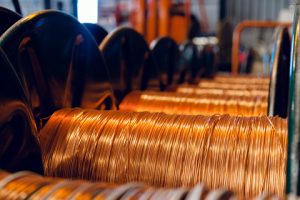 Transformers and copper cabling are now among the scarcest components in the AI build-out,
with lead times stretching to several years.
Does this mean households should expect power cuts? In Britain, not this winter. The National Energy System Operator forecasts an operational surplus of 5.9 GW, a comfortable margin over peak demand. Grid connection queues already hold around 50 GW of data-centre requests, so most new facilities must wait before they can draw power.
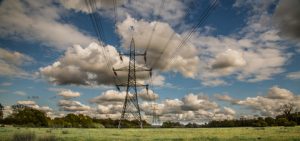 Britain’s grid operator expects comfortable electricity margins this winter, but the long queue
for new connections tells a longer-term story.
The more immediate risk is to bills rather than to supply. In the PJM region, data centres accounted for 63% of one year’s capacity price rise, a cost passed on to every ratepayer. Britain’s power prices are set largely by gas, so it remains exposed through the disruption in the Strait of Hormuz, which has removed around a fifth of the world’s seaborne LNG capacity.
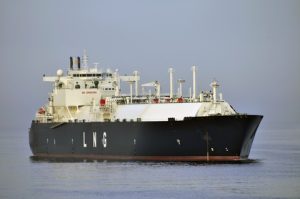 The disruption in the Strait of Hormuz has removed around a fifth of the world’s seaborne LNG capacity,
leaving Europe’s gas-linked power prices exposed
Yet the choice between keeping the lights on and curbing AI is a false one. Oregon has created a dedicated electricity rate class for data centres, and Virginia lawmakers have proposed shifting capacity costs away from households. The IEA recommends flexible, grid-integrated operation, so that data centres can ease demand at peak times. Sited intelligently, they can absorb renewable power that would otherwise be curtailed, and their waste heat can feed local heat networks.
For suppliers of physical commodities, the implications are significant. If technology companies begin drilling for their own gas, demand will rise for well-service and drilling chemicals. Turbines, cables, pipelines and cooling systems all rely on coatings, polymers and speciality chemicals. Every shift in gas demand also ripples through petrochemical feedstocks, fertilisers and fuels, markets already unsettled by events in the Gulf.
 Behind every gigawatt of computing power lies a physical supply chain
of drilling chemicals, coatings, polymers and fuels
Gapuma follows these currents closely, through its chemicals distribution across West Africa, its biofuels activity and its long-standing focus on the Strait of Hormuz as a barometer of global trade. Where grids are weakest, as in much of Africa, the self-powered model SpaceX is pioneering in Texas has long been familiar. As data-centre investment reaches cities such as Lagos, Accra and Abidjan, reliable access to materials will matter more than ever.
The AI revolution will be written in code, but it will be built with molecules. Those who keep those molecules moving through scarcity, volatility and geopolitical shock will help determine how quickly it arrives.