


PETKIM remains Turkey’s first and only integrated petrochemical company
By: Phume Mazibuko – Operations Associate
5 November 2026
When the Strait of Hormuz closed this spring, Turkish converters felt it within weeks. Between early March and early May, the price of PVC delivered to Turkey rose from $840 to $1,190 a tonne – an increase of more than 40% – and six months on, supply remains tight.
The shock laid bare a weakness that S&P Global Commodity Insights examines in its September report on the Turkish market. Turkey is one of the great manufacturing hubs between Europe and Asia, supplying packaging, textiles, white goods and car parts, yet it imports most of the polymer its factories consume. For a distributor such as Gapuma, the distance between what Turkey makes and what it uses is where the commercial story lies – in supply risk, in pricing and in opportunity.
Turkey is now moving to close that distance. On 27 October, Univation Technologies announced that Petkim, SOCAR’s Turkish petrochemical arm, had chosen its UNIPOL process for a planned 850,000-tonne-a-year polyethylene complex at Aliağa – one of the largest PE technology licences ever awarded in Turkey. Univation’s president, Sereen Massoud, said the project “would support PETKIM’s long-term growth while expanding domestic supply.”
A second milestone falls on 30 November, when Turkey’s deadline for recycled plastics in food-contact packaging takes effect. Together, the two developments show a country tackling its shortfall from both ends: building new capacity, and making better use of the material it already has.
A Manufacturing Hub Reliant on Imports

Turkey’s demand for PE, PP, PVC and ABS has outgrown GDP for years, driven by packaging, export-focused converters and urbanisation
S&P’s analysts describe Turkey as structurally short of polyethylene (PE), polypropylene (PP), PVC and ABS. For years, demand for these polymers has outgrown GDP, driven by packaging, export-focused converters and urbanisation, while domestic capacity has barely moved.
The figures are stark. Turkey imported around 2.1 million tonnes of PP in 2025, making it the world’s third-largest importer, with Saudi Arabia its biggest supplier. Its sole PVC producer has 150,000 tonnes of capacity, against forecast demand this year of roughly 1.17 million tonnes. And in ABS, South Korea supplied about 60% of imports in 2025, feeding the country’s white goods and auto parts makers.
Domestic supply is also highly concentrated. For PE, PP and PVC alike, Turkey relies on a single producer, Petkim, whose PP capacity stands at around 145,000 tonnes a year – less than a tenth of the PP the country imports.
PET is the exception. Producers such as Sasa and Koksan have invested heavily, and Turkish demand for PET resin grew from 475,000 tonnes in 2019 to 720,000 tonnes in 2025.
2026: A Stress Test for Supply
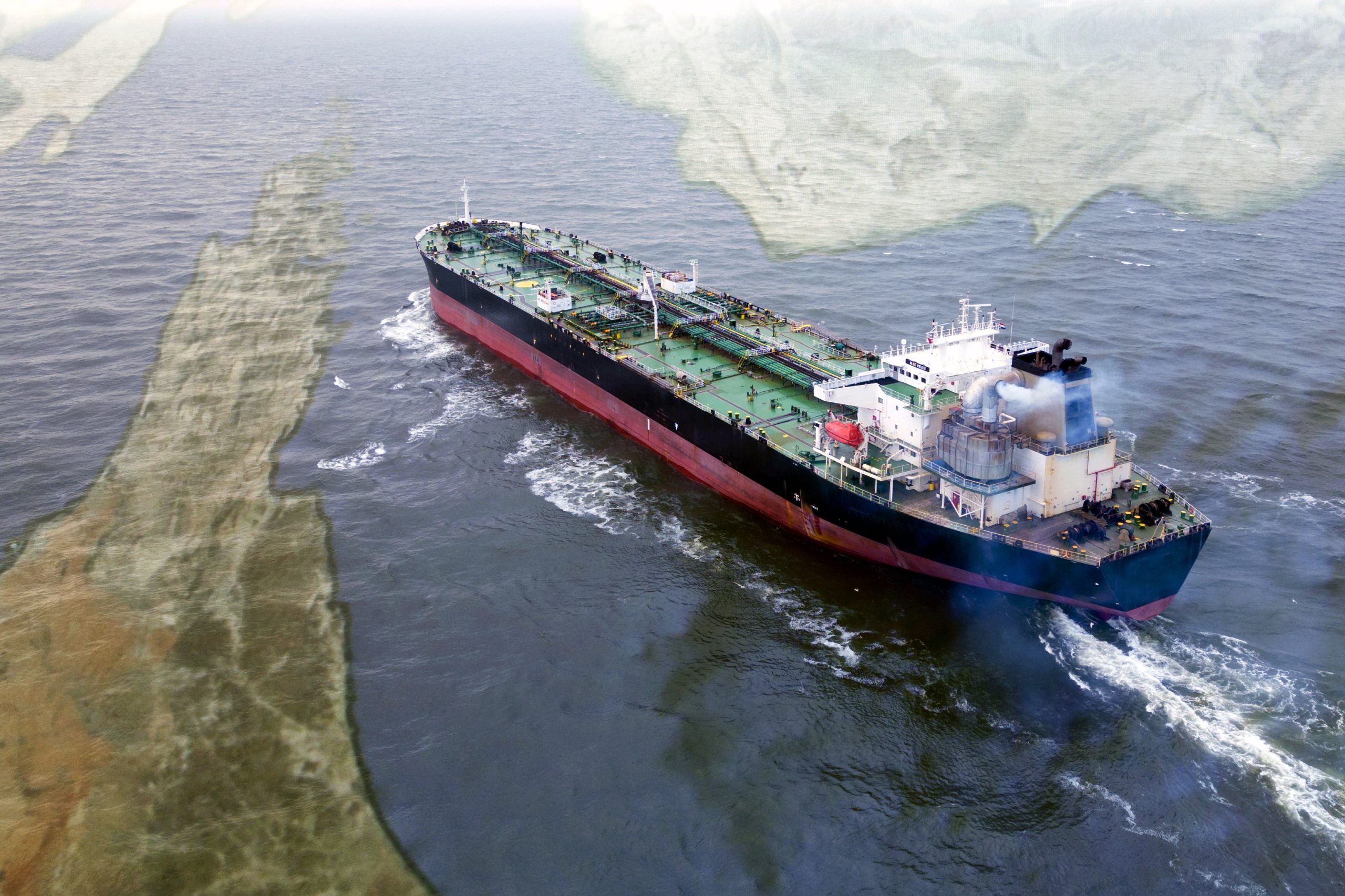
Around 84% of Middle East polyethylene capacity relies on the Strait of Hormuz for seaborne exports (ICIS)
The Middle East war and the closure of the Strait of Hormuz exposed that dependence almost overnight. ICIS estimates that around 84% of Middle East PE capacity relies on the Strait for seaborne exports – precisely the supply on which Turkey leans most.
Buyers rushed to secure what they could. ChemOrbis data shows that Turkey’s polymer imports hit their highest monthly level on record in April, up 21% on March. The supplier mix shifted too: Saudi ABS shipments to Turkey more than tripled between the first and second quarters, as Korean cargoes became slower and costlier to deliver.
Nor has the pressure fully eased. ChemOrbis reported that Turkish PP and PE prices kept rising through September, driven by tight availability rather than costs. The lesson is a simple one: where a market depends on a single supply route and a single domestic producer, one disruption can reprice it entirely.
Turkey’s Policy Response
Ankara is pursuing three approaches in parallel: protection where it already has capacity, regulation to grow recycled supply, and new capacity where it is short.
Protection
Since 19 July, Turkey has applied a safeguard duty of $120 a tonne on PET resin imports, falling to $110 by the third year and running until December 2028. It replaced a provisional $100 duty introduced at the end of 2025, which Turkey notified to the WTO in January.
Regulation
In September 2025, Turkey lifted its ban on recycled plastics in food-contact packaging under an EU-aligned framework, with strict rules on decontamination and traceability. Operators have until 30 November to comply in full. With multinational beverage brands already working towards EU-style recycled-content targets, the number of recyclers ready by the deadline will shape the supply of food-grade R-PET in 2027.
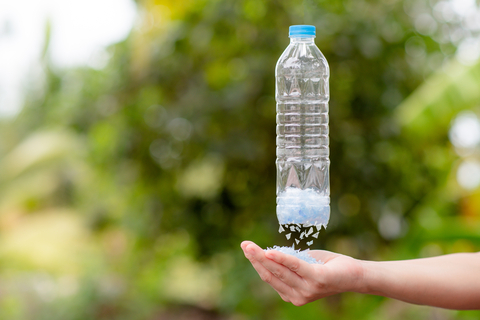
From 30 November, Turkish operators must comply fully with EU-aligned rules on recycled plastics in food-contact packaging
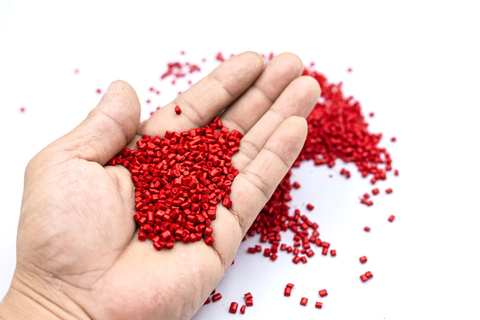
Turkey imported around 2.1 million tonnes of polypropylene in 2025, the third-largest volume in the world
New capacity
Three projects stand out:
| Project | Product | Capacity | Latest status |
| Petkim Master Plan (SOCAR) | Ethylene, PE, PP | New PE complex of 850,000 t/yr; PP from 145,000 to 550,000 t/yr | PE technology chosen 27 October 2026; FEED under way with Technip Energies; investment decision pending |
| Ceyhan PP (Rönesans, Sonatrach) | PP | 472,500 t/yr | Slipped from April 2026 to 2027 |
| Sasa PDH | Propylene | 1 million t/yr | Scheduled 2026/27, per S&P |
Petkim’s master plan is the most significant. Engineering is already under way: in late September, Petkim awarded Technip Energies the licence for a new ethylene cracker and the front-end engineering for the wider complex. Petkim says the plan could cut Turkey’s PE import bill by about $1.5 billion a year.
The open question is timing. Fitch still expects SOCAR to take the final investment decision by the end of 2026; Petkim’s own latest investor presentation points to 2027, once engineering is complete. Either way, a positive decision would be the clearest signal yet that Turkey means to close its polymer gap.
Even then, relief will be gradual. Rönesans says its Ceyhan plant alone would meet roughly 17% of Turkey’s PP demand, but the project has slipped to 2027, and none of the new capacity will arrive quickly. Turkey will remain import-dependent for years.
Nigeria: A Case Study in Import Substitution
Nigeria tells a different story. Until recently, according to the Manufacturers Association of Nigeria (MAN), the country imported about 90% of its PP – roughly 250,000 tonnes a year.
The Dangote refinery’s PP plant is Africa’s largest, at 830,000 tonnes a year
That changed in March 2025, when the Dangote refinery’s PP plant came on stream. With 830,000 tonnes of annual capacity, it is Africa’s largest, and Aliko Dangote left no doubt about its purpose: Nigeria “will not import any more polypropylene.”
The early evidence bears him out. BusinessDay reports that Nigeria’s reliance on imported PP has fallen to a six-year low, with converters describing supply as relatively steady, and MAN estimates the switch saves the country around $267 million a year.
The group is not standing still. In April 2026 it announced a deal with Honeywell to add 750,000 tonnes a year of propylene for plastics and packaging, and it already exports PP through Vinmar to markets across West, Central and Southern Africa. Just as importantly, none of this supply depends on the Strait of Hormuz – an advantage this year has thrown into sharp relief.
Implications for Gapuma and Our Customers
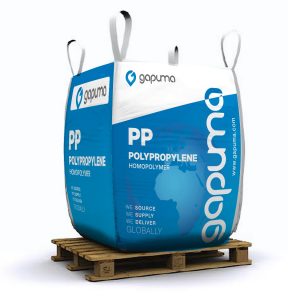
Non-Gulf sourcing is increasingly valuable in a short market
Turkey and Nigeria stand at opposite ends of the same trend: one a short market paying a premium for prompt cargoes, the other emerging as a regional supplier. Four implications follow for Gapuma and those we serve.
Diversified sourcing adds value. When Gulf and Asian supply tightened this year, Turkish buyers turned to Egypt and Europe. Distributors able to offer non-Gulf origins are well placed to serve short markets.
Trade defence is spreading. Turkey’s PET safeguard is one of many, and pricing and landed-cost planning must now allow for duties that can change within months.
West Africa has a new reference point. For our markets in Ghana and Côte d’Ivoire, Dangote PP is a nearby, non-Gulf source – and it changes the competitive picture for anyone importing PP into the region.
The capacity pipeline will set the pace. If Petkim, Ceyhan and Sasa all deliver, Turkey’s import needs will shrink. Until then, it will remain one of the world’s most important destinations for traded polymers.
Gapuma will continue to follow these developments closely and keep our customers informed at every turn. We are always glad to talk to partners who are reviewing their polymer sourcing.