



Hormuz, Beijing and Moscow: The Geopolitics of Oil Are Being Rewritten in Real Time
The movement of two Chinese supertankers through the Strait of Hormuz today – the Yuan Gui Yang and Ocean Lily, carrying approximately 4 million barrels of crude after waiting in the Gulf for more than two months – has sent an immediate and unmistakeable signal to commodity markets. Brent crude fell to as low as $110.16 a barrel on the news.
This is not merely a shipping story. It is a geopolitical statement.
The vessels’ passage comes as President Trump and President Xi concluded a two-day summit in Beijing, with a White House official describing the talks as “good.” US Treasury Secretary Scott Bessent told CNBC that China would work behind the scenes to help reopen the strait, noting that Beijing has “a much bigger interest in reopening the strait than the US does.” Beijing, characteristically, said nothing publicly about Hormuz – Chinese state media reported only that the leaders “exchanged views on major international and regional issues, such as the Middle East situation.”
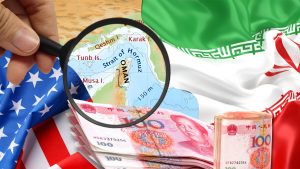 Silence, in diplomacy, is often the loudest language.
Iran has reportedly sought to implement a toll system for vessels crossing Hormuz – a brazen assertion of sovereign authority over an international waterway that carries roughly a fifth of the world’s oil supply. That Chinese-flagged supertankers are now moving freely while broader restrictions remain in place is a pointed reminder of where true leverage lies.
Meanwhile, closer to home, Prime Minister Keir Starmer has authorised the import of Russian-refined diesel and jet fuel into the UK indefinitely, alongside a temporary licence permitting the maritime transport of Russian LNG from the Sakhalin-2 and Yamal terminals. The government frames it as pragmatism. Treasury Minister Dan Tomlinson told Sky News the government was “acting pragmatically to insulate British citizens from the economic fallout of the Middle East conflict.” Critics – not least opposition leader Kemi Badenoch – see it differently: as analysts have noted, from Moscow’s perspective, it demonstrates that Western countries are “not that committed to a sanctions regime” when their own consumers feel the pinch.
The broader picture is stark. Global oil supply has declined by 12.8 mb/d in total since February, with output from Gulf countries affected by the Strait’s closure running 14.4 mb/d below pre-war levels. The IEA projects a decline of 3.9 mb/d on average across 2026, assuming flows gradually resume from June. The United Nations has already cut its global growth forecast to 2.5% this year, against an estimated 3% last year, citing higher energy costs and weaker trade.
For commodities and futures desks, the key questions now are whether today’s tanker movements represent a genuine reopening or a bilateral Chinese carve-out – and whether the gap between the two matters less than markets think. Wood Mackenzie has estimated Brent could approach $200 a barrel if the Strait remains largely shut until the end of the year. The downside scenario, by contrast, assumes a rapid diplomatic resolution that supply chains are ill-prepared to absorb smoothly.
At Gapuma Group, we are watching these developments closely across energy, commodities and futures markets. The rules of the game are changing – and the players setting them are not all where they used to be.
For market intelligence, trading insights and strategic analysis, connect with the Gapuma Group team.