


9 July 2026
When the US–Iran ceasefire collapsed in the Strait of Hormuz this week, the headlines went straight to price. Brent ticked up, then wobbled either way, and most commentary moved on. But for the companies that actually move oil, gas and chemicals through that water, the price is not the problem. The problem is everything sitting underneath it.
Hormuz carries roughly a fifth of the world’s seaborne oil and LNG. That makes route reliability a commercial contract in its own right, and it is precisely the thing a trader cannot hedge. You can hedge crude. You cannot hedge a captain who refuses to enter a severe-risk zone, an insurer who rewrites a war-risk exclusion overnight, or a payment rail that quietly narrows while your cargo is still mid-voyage.
That last point is the one keeping people up. A US general licence opened a legal corridor for Iranian oil on 21 June. Within roughly a fortnight it was revoked and replaced with a wind-down order. Legal permission, it turns out, is not the same as bankable confidence, and each transaction now carries a lifecycle risk that is far harder to price than the commodity itself.
This is why so many commodities businesses are in a genuine tailspin right now. The instinct is to watch the screen. But the screen is a lagging indicator. A vessel that turns back, an insurer that hesitates, a bank that declines a settlement, none of it registers immediately as a shortage. It registers as friction. Friction compounds quietly, and by the time it reaches the price, the decision you needed to make was already late.
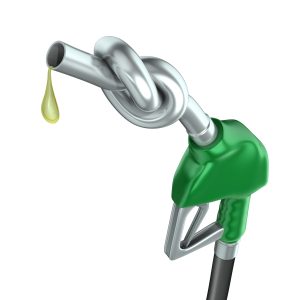
The firms that come through this well will not be the ones with the best price call. They will be the ones who treated the route, the licence and the counterparty as three separate clocks, and started tracking all three before the market did.
Strategy in this environment is not prediction. It is knowing which questions to ask, and asking them early.
Gapuma Group | Trading commodities and speciality chemicals across international markets, with a clear read on the ground beneath the price.